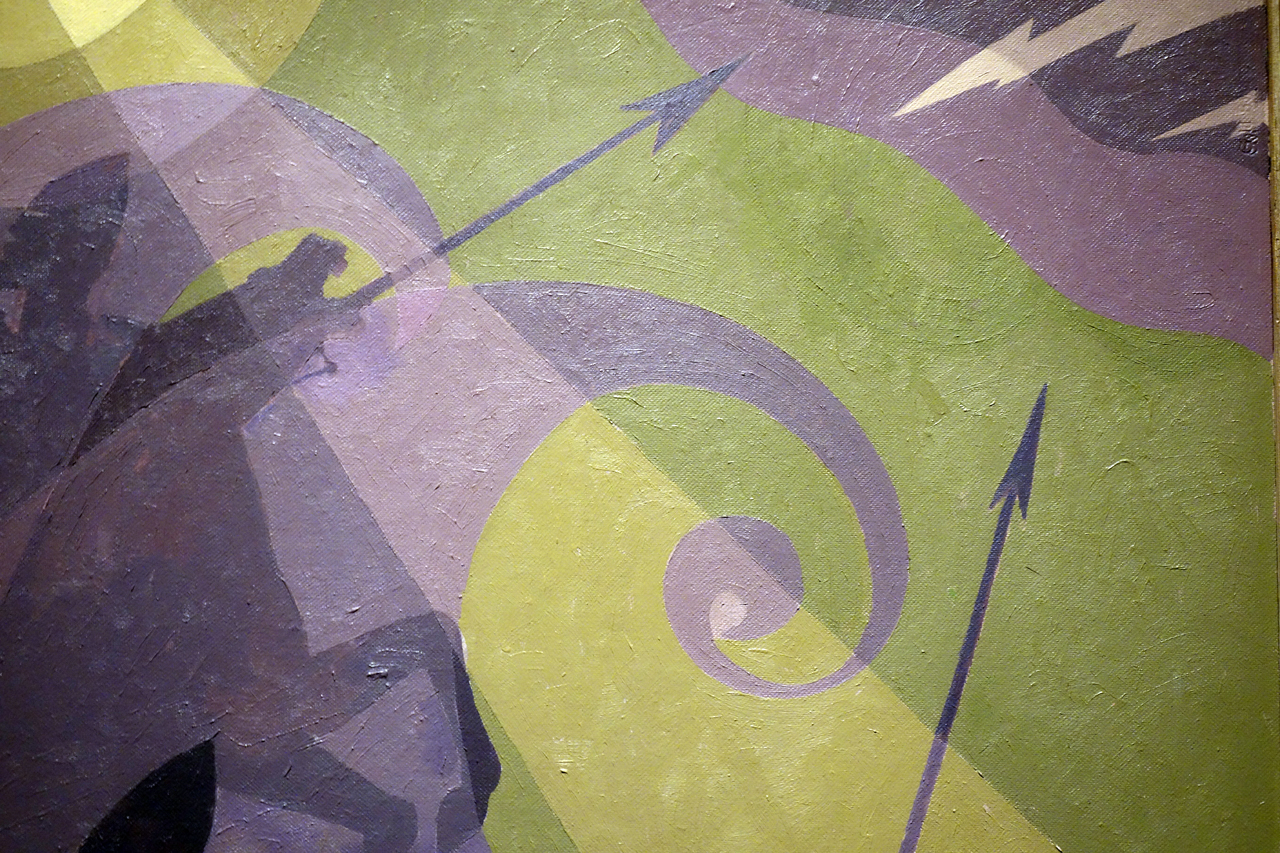
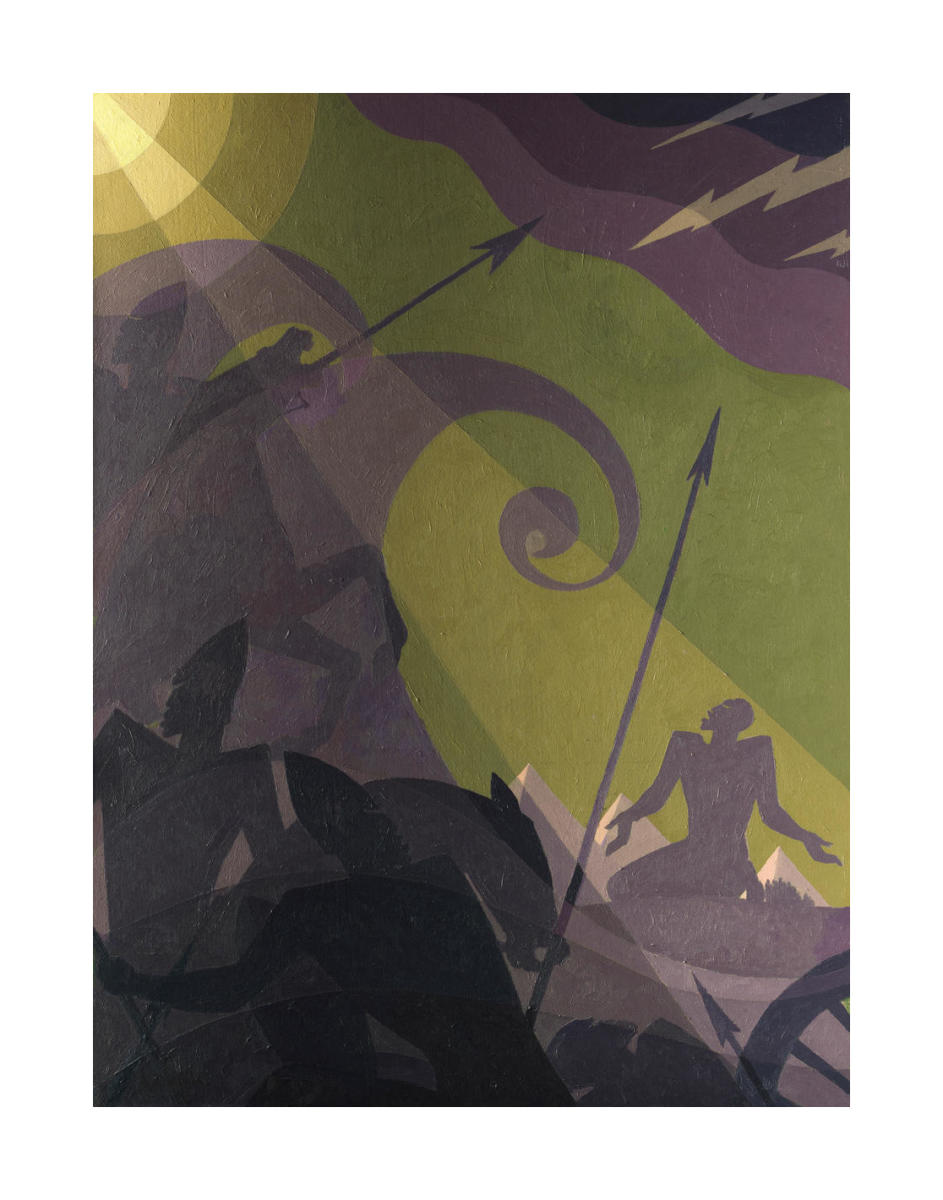
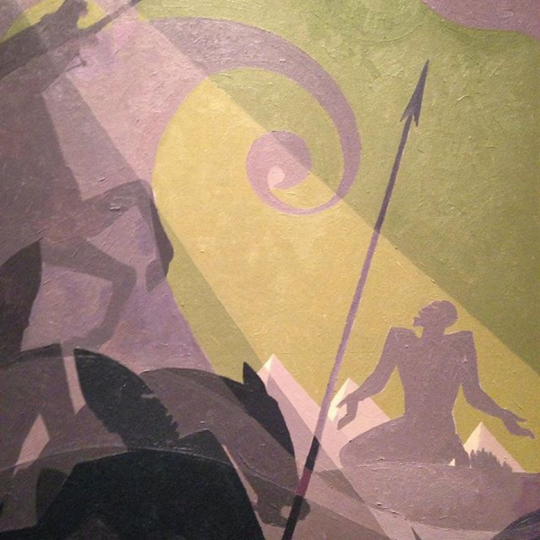
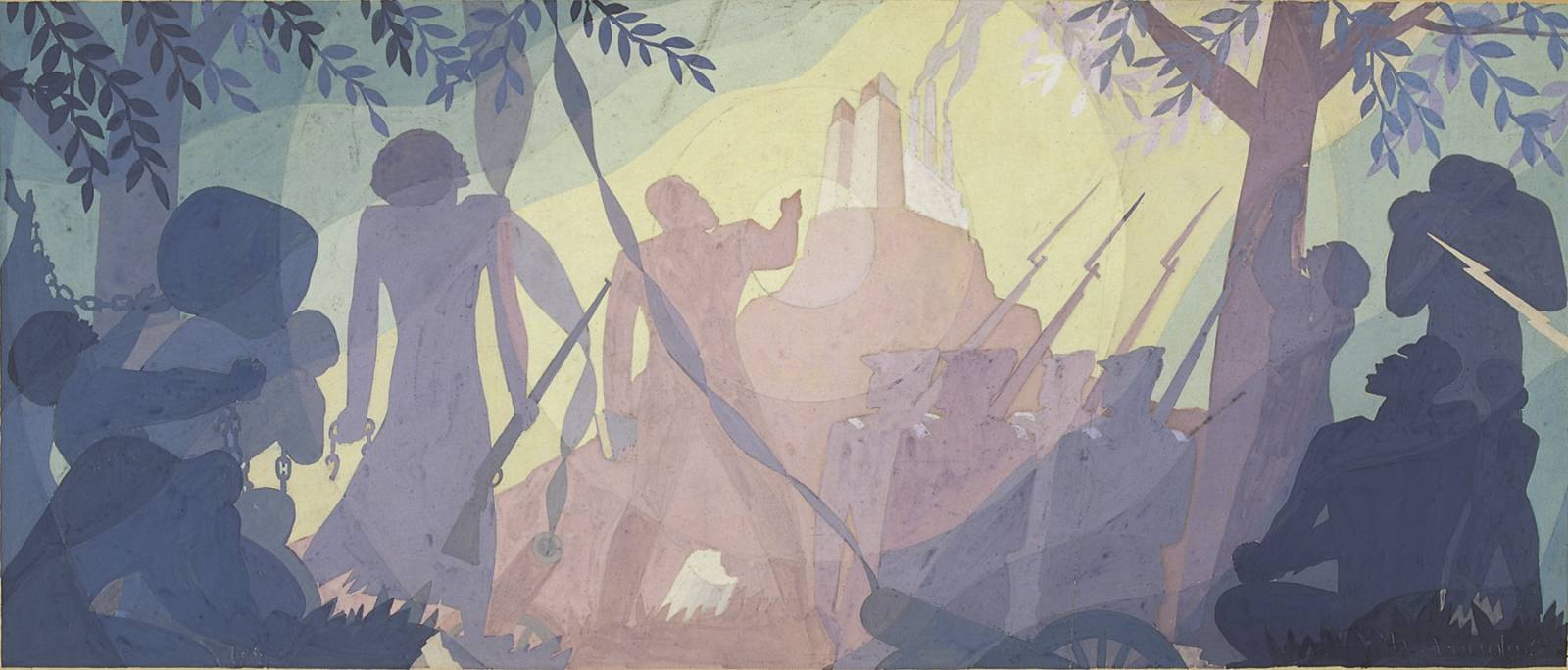
This radiant painting in lavender and yellow-gold hues belongs to a series of eight panels that revisits designs Aaron Douglas made in 1926 to illustrate author and activist James Weldon Johnson’s God’s Trombones: Seven Negro Sermons in Verse. The seventh panel in the series, Let My People Go visually interprets the Old Testament story about God’s order to Moses to lead the Israelites.. His most famous mural, Aspects of Negro Life, fills the reading room at the Schomburg Center for Research in Black Culture, part of the New York Public Library branch on Malcolm X Boulevard. In fall 2014, the Metropolitan Museum had the opportunity to acquire Let My People Go, a rare easel painting by Douglas.

A Rare Encounter with an Aaron Douglas Painting that References Slavery

Aaron Douglas, “Let My People Go,” 193439, Met Breuer Painting, Art
A Rare Encounter with an Aaron Douglas Painting that References Slavery
Aaron Douglas Evolution Of Negro Dance
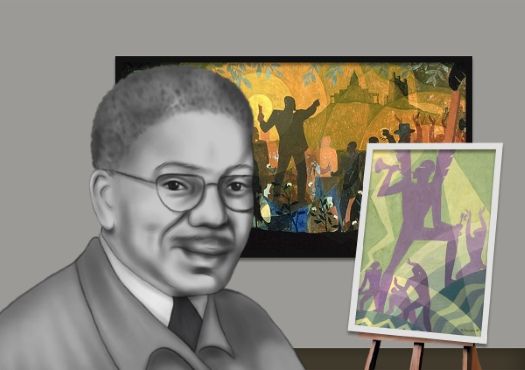
Aaron Douglas Paintings, Bio, Ideas TheArtStory

Let My People Go (1935 1939) by Aaron Douglas Artchive
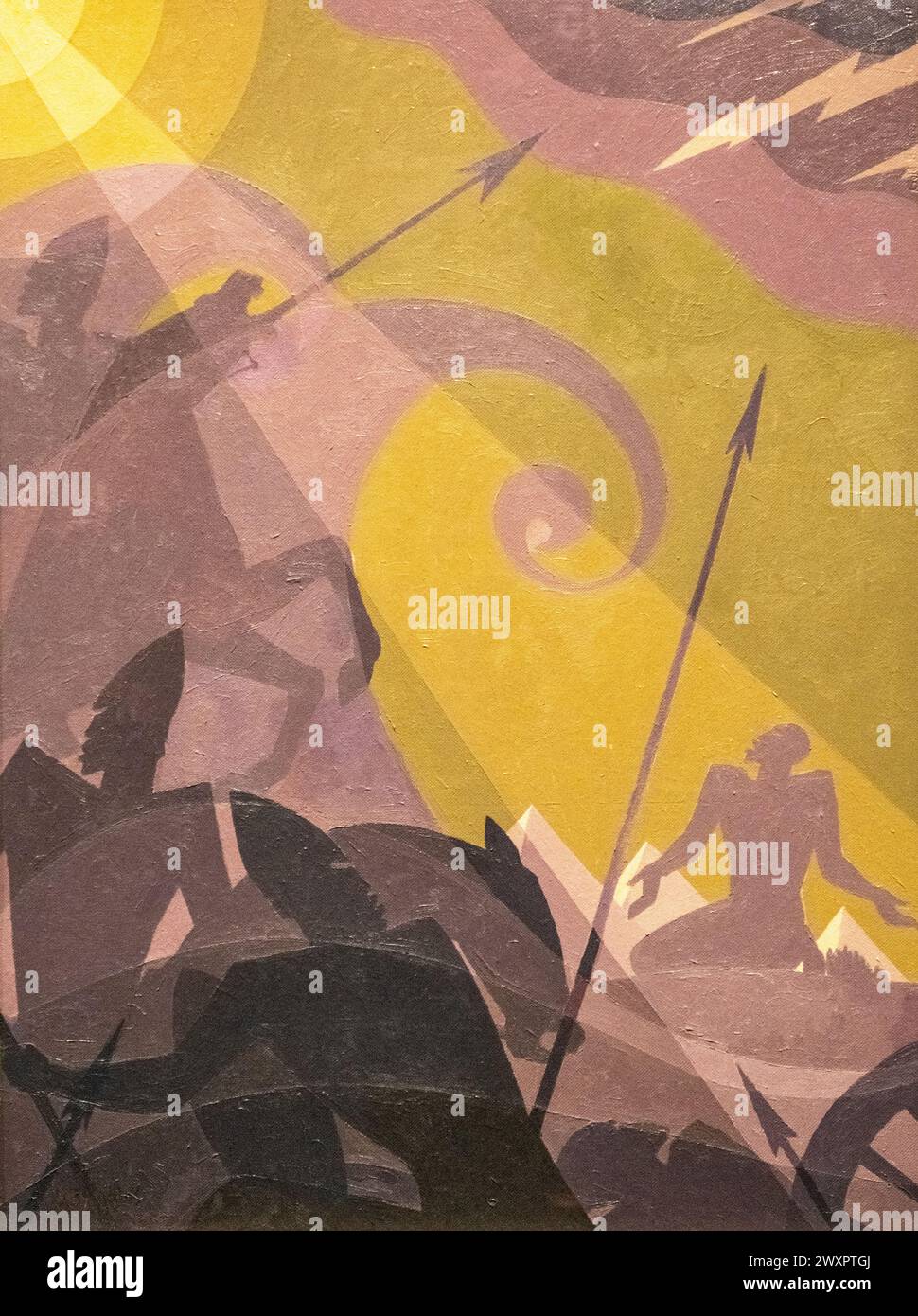
Aaron Douglas painting called Let My People Go done in 193539 Stock
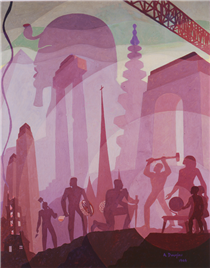
Aaron Douglas 17 artworks painting

Artist Aaron Douglas

Let My People Go by Aaron Douglas Paper Print Met Custom Prints

Artist of the Month Aaron Douglas Muddy Colors
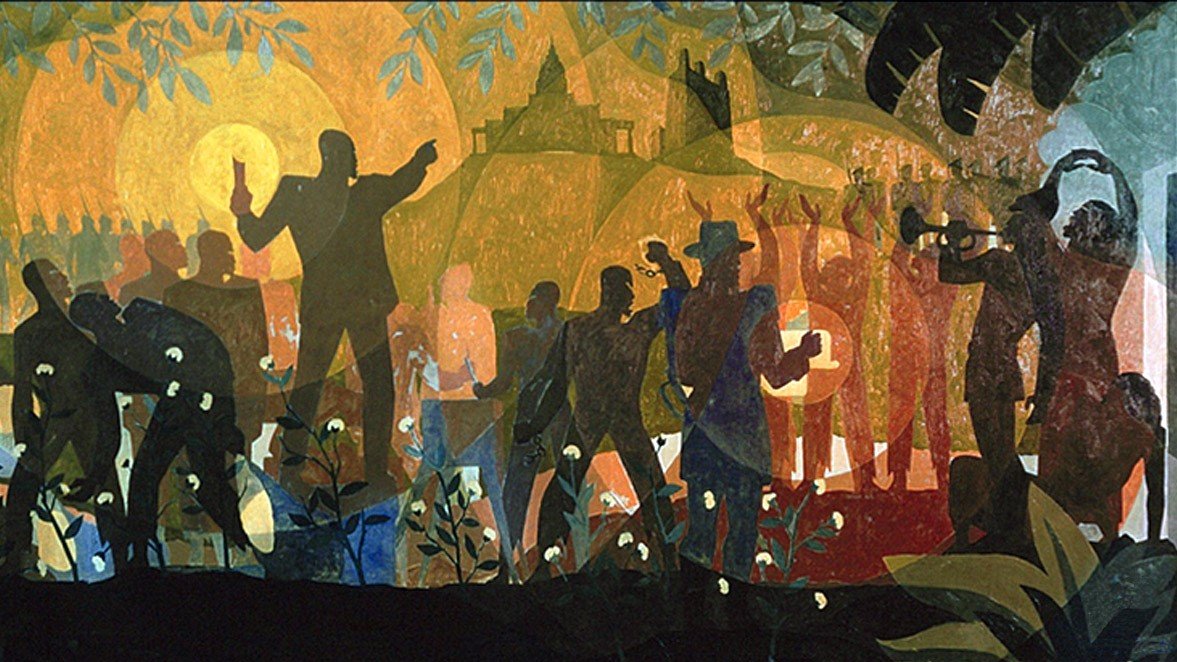
A Study of Artist Aaron Douglas Painting the Human Figure in the

Let My People Go (Aaron Douglas) Análise Visual YouTube
Aaron Douglas 17 artworks painting
6 Influential AfricanAmerican Artists Sartle Rogue Art History

Aaron Douglas Art
Artist Aaron Douglas Art
Aaron Douglas Let My People Go The Metropolitan Museum of Art

A Rare Encounter with an Aaron Douglas Painting that References Slavery

Aaron Douglas Art
1. “Let My People Go”, Aaron Douglas, 1930s – Archival Quality Art Print When I first came across the “Let My People Go” archival quality art print by Aaron Douglas from the 1930s, I was immediately drawn to its historical and cultural significance. Aaron Douglas is a pivotal figure in the Harlem Renaissance, and this piece encapsulates powerful themes of liberation and identity.. Douglas was instrumental in the Harlem Renaissance, which occurred during the 1920s and 1930s. This painting, called “Let My People Go,” is the artist’s interpretation of the biblical Moses’s plea to the Pharaoh to free his people.